Tag Archives: homestead

Black Locust Coppicing, Part 7

Edible Wood Ear fungus (the name is fitting) growing on the bark of Black Locust which had been cut last year and left to lay on the ground

Disclaimer: Outside of its native range (in and around the Appalachian Mountain range in Eastern North America) Black Locust – Robinia Pseudoacacia – can become invasive. It is a pioneer species meant to recolonize disturbed ground and compete with grass. If you are outside of its native range please proceed with caution with this species, or consider using a species native to your area that fills the same niche.

Black Locust Coppicing – Part 1, Part 2, Part 3, Part 4, Part 5, Part 6

It is now late winter – February of 2025 – and I have just bucked up the stems from last year which I had felled and left to lay on the ground. Leaving them down produced an interesting result – fungus. The sapwood and heartwood of the main stems didn’t become colonized with mycelium, but the twigs, small branches, and bark (headline picture) were in many cases well on their way into decay. This was interesting and mildly surprising given the Black Locust’s storied rot resistance, but I don’t think it was anything that would challenge its reputation as it did not affect the ‘lumber’ parts. It does answer a question I have seen – the small brush piles could be used to good effect as a hugel bed filler (a project for another day, possibly another year).

Continue reading

7 Comments

Filed under agrarianism, black locusts, coppicing, hand tools, homesteading, trees, woods

Black Locust Coppicing, Part 6

The largest stem currently is approximately 3″ diameter and 16′ tall, and was the only sprout on a 4″ diameter stool

Disclaimer: Outside of its native range (in and around the Appalachian Mountain range in Eastern North America) Black Locust – Robinia Pseudoacacia – can become invasive. It is a pioneer species meant to recolonize disturbed ground and compete with grass. If you are outside of its native range please proceed with caution with this species, or consider using a species native to your area that fills the same niche.

Black Locust Coppicing – Part 1, Part 2, Part 3, Part 4, Part 5, …, Part 7

It is now late summer of 2024, the coppicing project has yet to complete two years of growth, and I already have 1 stem (headline picture) which I am very seriously considering taking this winter. My goal with this project is to maintain a strict hand-tools only harvesting method, and anything much beyond 3″ diameter starts to become burdensome to that goal. This thickness of the base allows for a few decent split-log sized pieces as well as a gradient of sizes down to kindling twigs, without ever having to buck large rounds or split anything. Most of the stems are not close to this and will take at least another year or two to be of useful size, but they are progressing at a pace that would seem to put the average stem harvest at 4 years from coppicing. My initial thought had been that I would be harvesting on a 5-8 year rotation, and as of now it seems it may be closer to 3-5 years.

Continue reading

10 Comments

Filed under agrarianism, black locusts, hand tools, homesteading, pond, trees, woods

Failure and Adjustments

Dead and dying lawn and hay fields in mid summer, green forests in the background

This year was an interesting year. I began an entirely new garden project of slightly over half an acre, planted dozens of apples, pears, hazelnuts, and mulberries, a dozen or more grapes, and a dozen blueberries. I brought in 60 yards of mushroom soil and half that of wood mulch, dug and planted six 5′ by 80′ beds of grains, vegetables, flowers, and herbs. I fenced it all in to keep the deer out, set up a gasoline pump to irrigate from the pond (The Farm Pond), and then over the rest of the season watched most of it fail miserably regardless of any efforts on my part.

Central Pennsylvania generally has a mild climate, and doesn’t usually see extremes of any kind except rarely in small doses. We have seen hot, dry summers, the remnants of hurricanes, briefly flooded valleys, late frosts that partly ruin flowering tree crops. This past year we had a dry winter, receiving a total of 6″ of snow for the whole season. In February we had multiple weeks of 60F weather, and in May had frosts down to the low 20s. We had a drought that wouldn’t quit, and a single day of 2″ of rain that just washed everything away instead of soaking in. Now in November, digging to plant garlic has uncovered that the soil is still bone dry. Local farmers exclaimed that in living memory nothing of the sort had ever happened here before, and these farmers are old enough that they should have retired decades ago. Harvests were devastated, many fields were written off as a loss and destroyed, some remain unharvested. Even hay crops were pitifully thin, portending a lean winter to come and thinning of herds on many farms.

Continue reading

1 Comment

Filed under agrarianism, food, homesteading, pond, soil, trees, Uncategorized, water, woods

Black Locust Coppicing, Part 4

Disclaimer: Outside of its native range (in and around the Appalachian Mountain range in Eastern North America) Black Locust – Robinia Pseudoacacia – can become invasive. It is a pioneer species meant to recolonize disturbed ground and compete with grass. If you are outside of its native range please proceed with caution with this species, or consider using a species native to your area that fills the same niche.

Black Locust Coppicing – Part 1, Part 2, Part 3, …, Part 5, Part 6, Part 7

It is now mid-July and the stumps have mostly become unintelligible thickets surrounded with poison ivy. The largest of the sprouts are fully 1 inch in diameter and 8 feet tall. The average sprout is around 0.5 inches in diameter and 5 to 6 feet tall. Most stumps have at least 4 sprouts, but because of the poison ivy I cannot get a detailed count on each individual stump, that count will come during the winter update. We had a historically dry spring in this area, but have gotten lucky recently with intermittent storms during the hottest days bringing us to about an average weekly rainfall for summer. This has not made up for the lack of rain in the spring, but at least is maintaining things on par with a normal hot summer.

Continue reading

8 Comments

Filed under agrarianism, hand tools, homesteading, trees, Uncategorized, woods

Mulching Comparison Experiment, Part 2

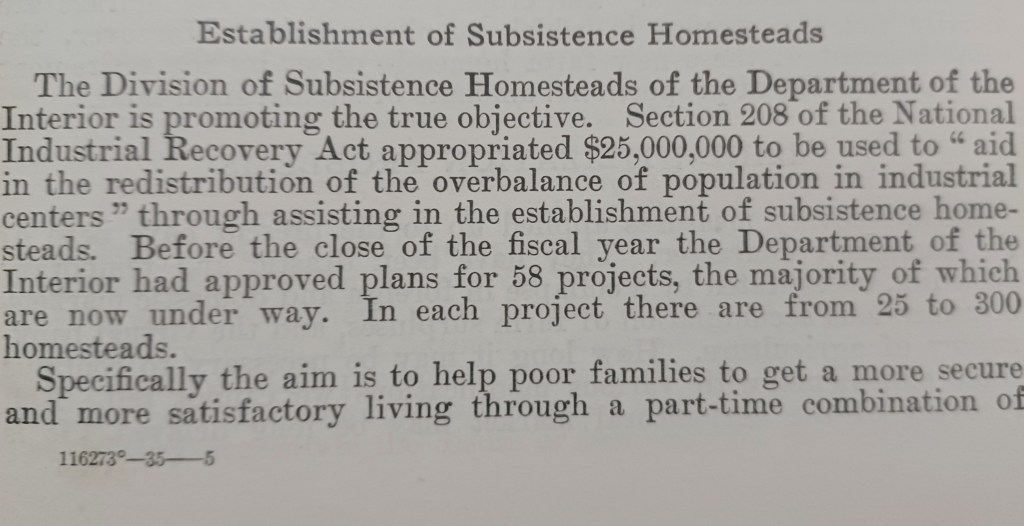
1935 USDA Yearbook of Agriculture; A different time with different solutions

I find it necessary to address the sustainability of each of the methods of growing that I will be comparing in my Mulching Comparison Experiment, Part 1. Sustainability is very important to consider when undertaking any agricultural venture. When I say sustainability I mean it very literally, not just speaking from an environmental standpoint. Can this method be sustained indefinitely under the current or foreseeable future conditions?

Continue reading

Leave a comment

Filed under agrarianism, homesteading, soil, Uncategorized

A Poem

The ice glistens,
The fire crackles,
The joints creak,
The tea steams,
The soup boils,
The mind turns inward.

The winter approaches.

2 Comments

Filed under art, poetry

Progress or …?

One of my best sources of information in the agronomic field has been the USDA Yearbooks of Agriculture. Having access to studies from 130 years ago up until the end of publishing in 1992 has been a boon for my education. It is hard not to notice, however, the stark changes in the writing styles over those years, and the perceived shift in the target audience based on the tone of the writing. Here I will present a contrast of two randomly selected excerpts to illustrate my point.

Continue reading

Leave a comment

Filed under agrarianism, books, Uncategorized, USDA Yearbooks of Agriculture

Subsoiler aka Chisel Plow (not a hand tool)

In my last post (Battle Royale (Agrarian Style)) I revealed that I have indeed used a tool on a tractor to accomplish an agrarian goal. I used a single shank subsoiler, aka chisel plow or ripper, to help prepare a hillside to become a productive orchard. There were definitely ways that I could have used hand tools only to suit this purpose, but it would have taken years worth of work and crop rotations. This solution allowed me to jump ahead with minimal investment of time and money, and with minimal negative consequences. Read on if you are interested in the reasons behind this exception to my rule (Hand Tools: The Simple Choice).

Continue reading

1 Comment

Filed under agrarianism, hand tools, homesteading, pond, soil, trees, Uncategorized, water

Mulching Comparison Experiment, Part 1

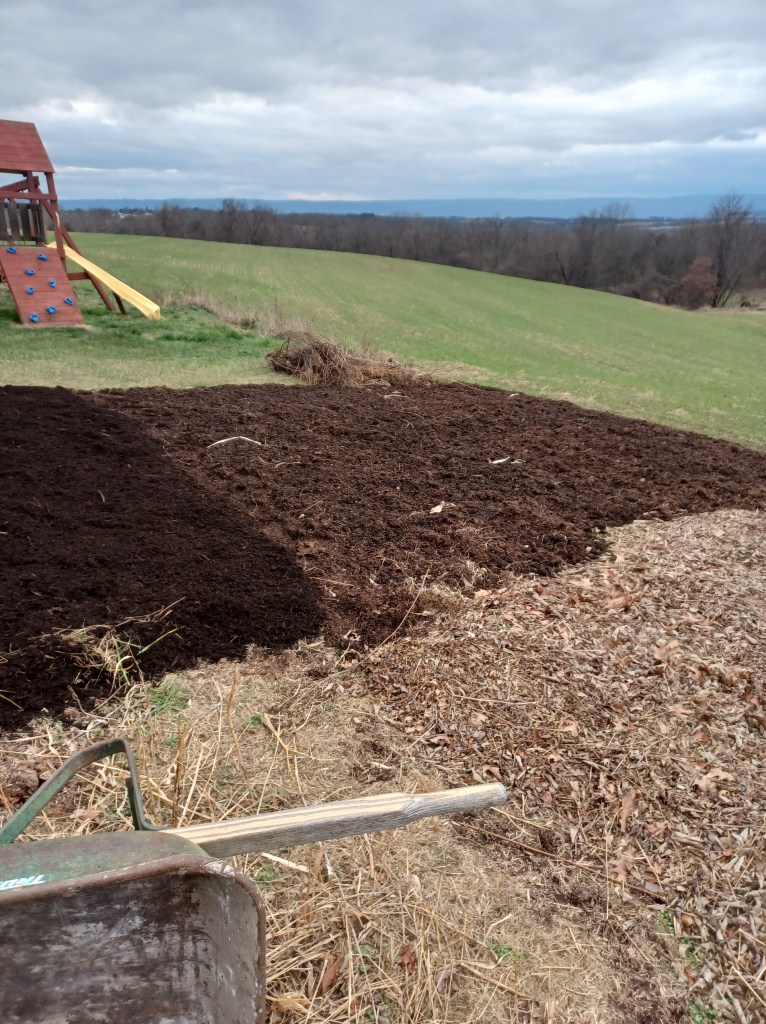
Garden with a view

I am starting new gardens from scratch this year, and in the interest of learning new things in new places (Thinking in Long Terms), I have set up an experiment to compare a few different methods of gardening. I will keep this as brief as possible, and expound upon each of these methods as I update you with progress reports over the following years. Each bed will be planted in the spring with potatoes, sweet potatoes, squash, and an assortment of vegetables, along with a row of sunflowers and buckwheat. I have no expectations or knowledge of how the results will look, this experiment is purely out of curiosity and I am excited to see how the different methods turn out. How will they yield, handle drought, soaking rains, etc?

Continue reading

2 Comments

Filed under agrarianism, food, hand tools, homesteading, soil, Uncategorized

Meat Rabbits; or How Children Can Provide Substantial Assistance on a Homestead, Part 1

Buck

Mature breeding buck

A few years ago we began asking the children this question: “If you could pick one farm project, what would it be?”  We got many wide-ranging answers, some realistic, some not.  One answer was given by our son – meat rabbits.  Our first step was to have him do what free and readily available research he could.  Once he exhausted our own home library, we bought the Storey’s Guide to Raising Rabbits, a pre-owned copy of course.  The Storey’s Guide series are one of our go-to introductions to any topic.  They are well-written by experts in the specific topic relevant to each book, they start from the beginning specifically for someone with no knowledge of the topic, and they go into enough detail that anyone could start that project without a more advanced book. Continue reading

1 Comment

Filed under agrarianism, children, homeschooling, homesteading, rabbits