

Disclaimer: Outside of its native range (in and around the Appalachian Mountain range in Eastern North America) Black Locust – Robinia Pseudoacacia – can become invasive. It is a pioneer species meant to recolonize disturbed ground and compete with grass. If you are outside of its native range please proceed with caution with this species, or consider using a species native to your area that fills the same niche.
Black Locust Coppicing – Part 1, Part 2, Part 3, Part 4, Part 5, Part 6
It is now late winter – February of 2025 – and I have just bucked up the stems from last year which I had felled and left to lay on the ground. Leaving them down produced an interesting result – fungus. The sapwood and heartwood of the main stems didn’t become colonized with mycelium, but the twigs, small branches, and bark (headline picture) were in many cases well on their way into decay. This was interesting and mildly surprising given the Black Locust’s storied rot resistance, but I don’t think it was anything that would challenge its reputation as it did not affect the ‘lumber’ parts. It does answer a question I have seen – the small brush piles could be used to good effect as a hugel bed filler (a project for another day, possibly another year).
Last year I started coppicing in Plot C as well as continued in Plot A. Plot C is in an alleyway between two established tree lines and the outline is like a lollipop – a single line of locusts with a cluster at one end – the area adding up to another 1/20th of an acre. On measuring this plot it has now occured to me that I somehow ended up with 5 plots, each of them almost exactly 1/20th of an acre, so once I have established coppicing in all plots I will be working with a quarter acre total area which would make the results quite similar to what could be expected on suburban lots.
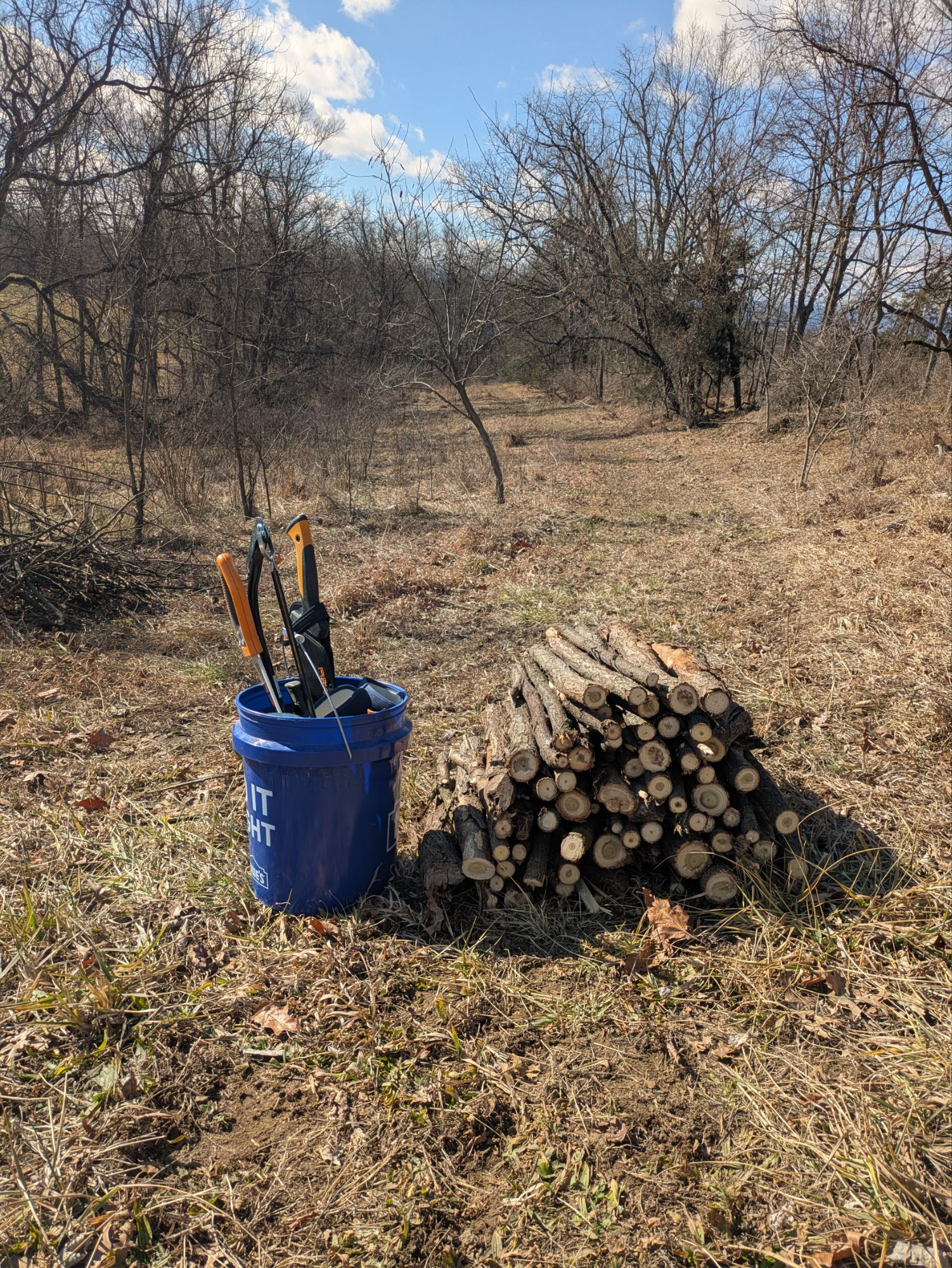
I cut 10 stems from Plot C, which made a stack equivalent to 0.56 cords per acre. This stand was entirely hand planted seedlings so I left the largest stems as standards to continue seeding the area since there are no established locusts in this plot. I will be cutting two of them this year, leaving two in place which are currently 5.5″ diameter at 12″ from the ground, and close to 20′ tall. Even one of those stems would have been equal to or more than this pile of wood, so I’m not disappointed in the result, far from it. The larger of the individuals have been setting seed for two years now, and the area is quickly filling in with seedlings, so I anticipate Plot C production will accelerate exponentially in about 5-6 more years.


I only cut 5 stems from Plot A, which made a stack equivalent to 0.36 cords per acre. Again I am not disappointed in this result even though it may seem meager because this is still the early years of this project and I can see the growth happening with my own eyes. From my results so far I can estimate that going from planted seedling to full production coppicing will take generally around 15 years, no small investment in time. Using Black Locusts does afford a relatively fast turnaround though, as if it were any other local hardwood species I would say more realistically it would take at least 25 years to establish a similar cyclical result.
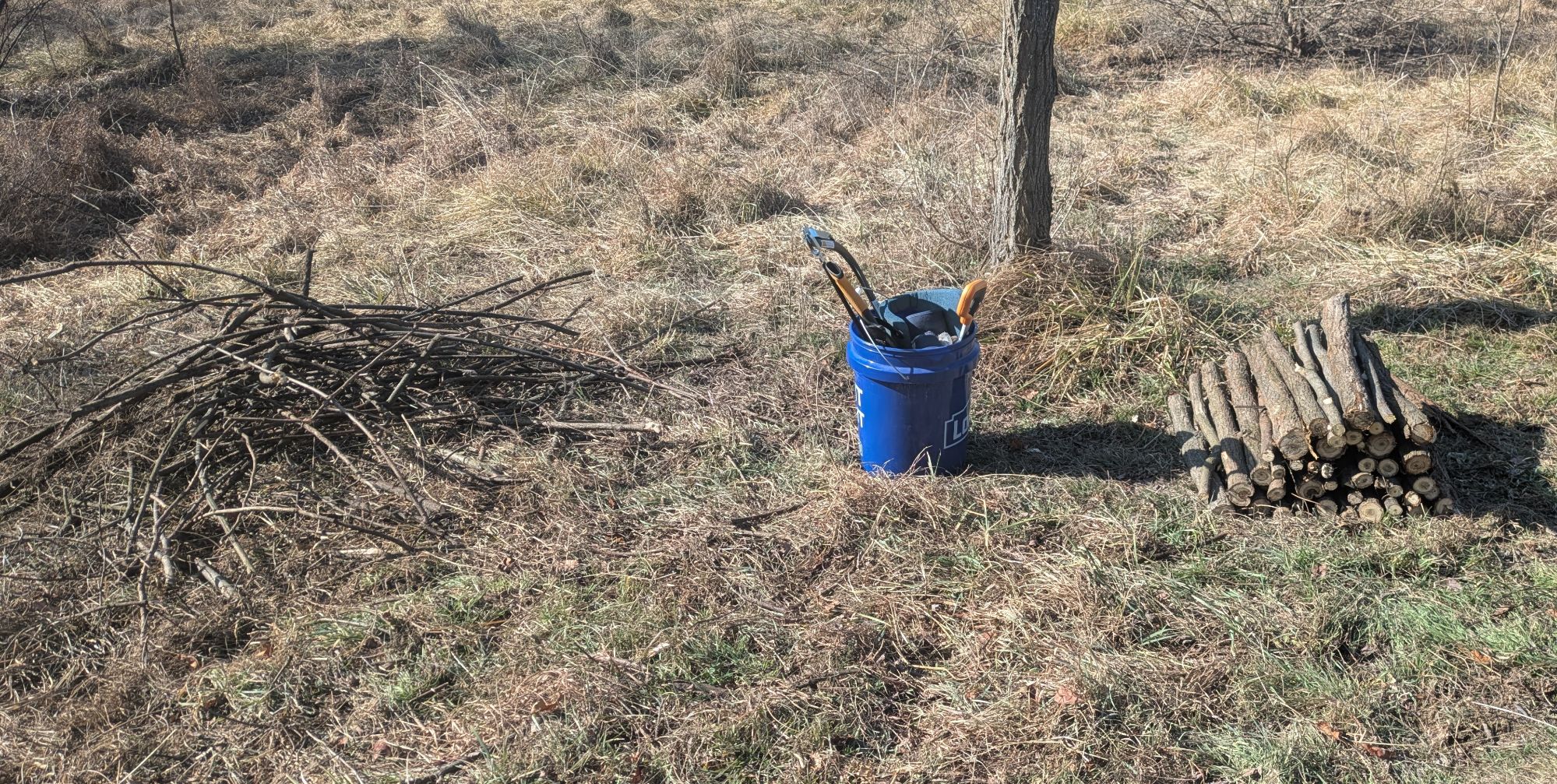
This year I got a bow saw and a larger fixed blade d-handle pruning saw to compare ease of bucking stems. For me the pruning style saw was just much easier and more consistent for this application as the handle was more comfortable and the blade being wider strangely made it easier to cut – the narrow blade of the bowsaw tended to bend or twist under certain conditions and not having the ability to have the teeth set wider, it did not efficiently clear the sawdust from the kerf as well as the pruning saw, leading to binding issues. I think also the thicker gauge of the pruning blade allows for more aggressive teeth, combined with the curve of the blade it cuts quickly with very little effort. This is not to say the bow saw didn’t work – it did and was fairly good at the job – but knowing that I have to put my shoulder through hundreds of cuts, every minor inconvenience will add up over time. The next step up in process would probably be a portable saw-buck, as cutting on the ground is quickly becoming a bottle-neck.
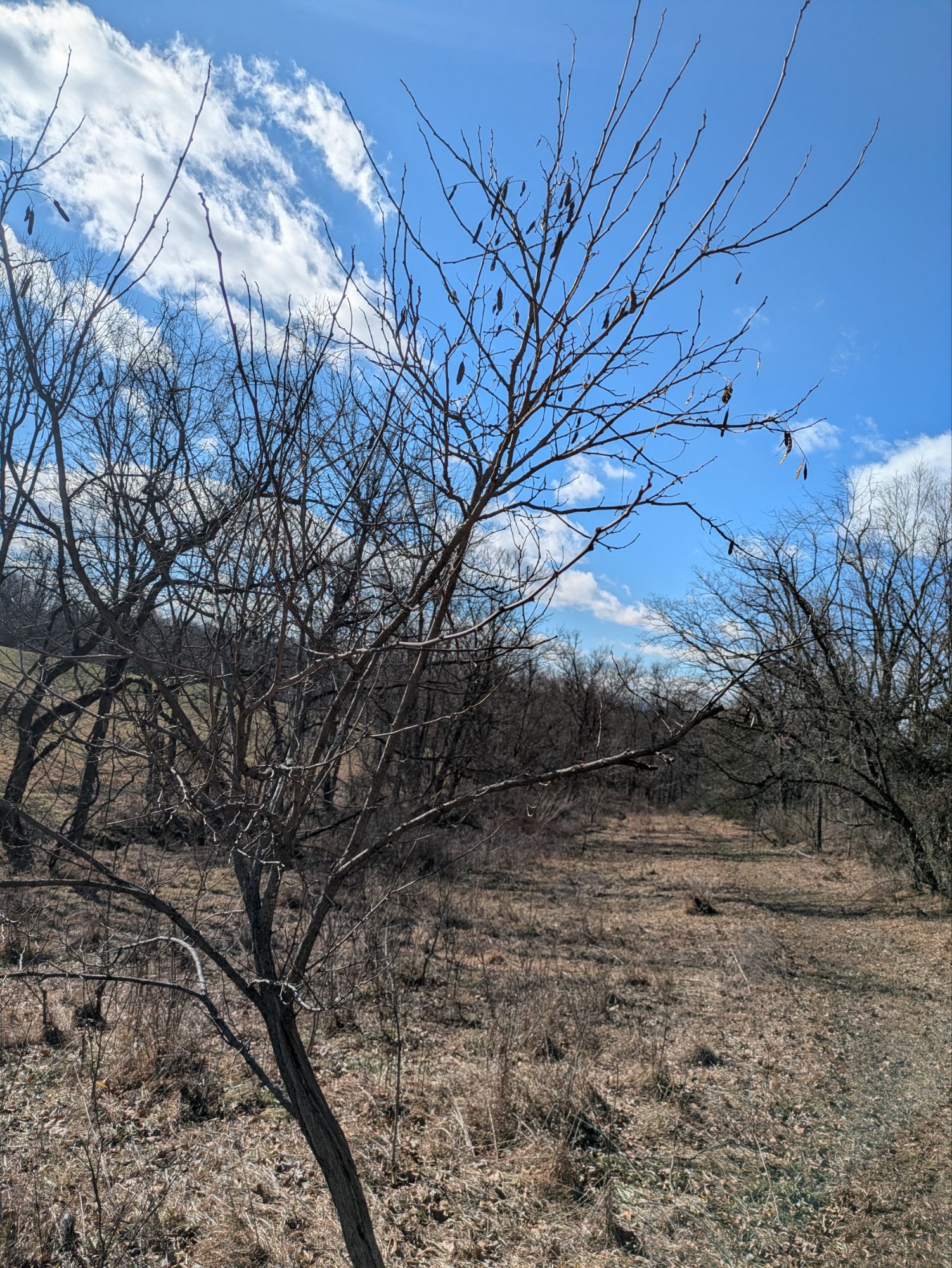
Coming up this year – cuts in Plot A, Plot B, Plot C, and probably Plot E as well! Plot D has been the hardest hit by deer with constant browsing and antler rubbing, and may be another few years before any coppicing can begin there.

 Anonymous Appalachian Agrarian
Pingback: Black Locust Coppicing, Part 6 | Anonymous Appalachian Agrarian
Pingback: Black Locust Coppicing, Part 5 | Anonymous Appalachian Agrarian
Pingback: Black Locust Coppicing, Part 4 | Anonymous Appalachian Agrarian
Pingback: Black Locust Coppicing, Part 3 | Anonymous Appalachian Agrarian
Pingback: Black Locust Coppicing, Part 2 | Anonymous Appalachian Agrarian
Pingback: Black Locust Coppicing, Part 1 | Anonymous Appalachian Agrarian
Thank you, very insightful. I’m a big fan of black locust, also New Mexico locust & honeylocust, & preparing to establish copses within a northern Appalachian white pine/ hardwoods regeneration parcel.
LikeLike