Black Locust Coppicing, Part 7

Edible Wood Ear fungus (the name is fitting) growing on the bark of Black Locust which had been cut last year and left to lay on the ground

Disclaimer: Outside of its native range (in and around the Appalachian Mountain range in Eastern North America) Black Locust – Robinia Pseudoacacia – can become invasive. It is a pioneer species meant to recolonize disturbed ground and compete with grass. If you are outside of its native range please proceed with caution with this species, or consider using a species native to your area that fills the same niche.

Black Locust Coppicing – Part 1, Part 2, Part 3, Part 4, Part 5, Part 6

It is now late winter – February of 2025 – and I have just bucked up the stems from last year which I had felled and left to lay on the ground. Leaving them down produced an interesting result – fungus. The sapwood and heartwood of the main stems didn’t become colonized with mycelium, but the twigs, small branches, and bark (headline picture) were in many cases well on their way into decay. This was interesting and mildly surprising given the Black Locust’s storied rot resistance, but I don’t think it was anything that would challenge its reputation as it did not affect the ‘lumber’ parts. It does answer a question I have seen – the small brush piles could be used to good effect as a hugel bed filler (a project for another day, possibly another year).

Continue reading

7 Comments

Filed under agrarianism, black locusts, coppicing, hand tools, homesteading, trees, woods

Black Locust Coppicing, Part 6

The largest stem currently is approximately 3″ diameter and 16′ tall, and was the only sprout on a 4″ diameter stool

Disclaimer: Outside of its native range (in and around the Appalachian Mountain range in Eastern North America) Black Locust – Robinia Pseudoacacia – can become invasive. It is a pioneer species meant to recolonize disturbed ground and compete with grass. If you are outside of its native range please proceed with caution with this species, or consider using a species native to your area that fills the same niche.

Black Locust Coppicing – Part 1, Part 2, Part 3, Part 4, Part 5, …, Part 7

It is now late summer of 2024, the coppicing project has yet to complete two years of growth, and I already have 1 stem (headline picture) which I am very seriously considering taking this winter. My goal with this project is to maintain a strict hand-tools only harvesting method, and anything much beyond 3″ diameter starts to become burdensome to that goal. This thickness of the base allows for a few decent split-log sized pieces as well as a gradient of sizes down to kindling twigs, without ever having to buck large rounds or split anything. Most of the stems are not close to this and will take at least another year or two to be of useful size, but they are progressing at a pace that would seem to put the average stem harvest at 4 years from coppicing. My initial thought had been that I would be harvesting on a 5-8 year rotation, and as of now it seems it may be closer to 3-5 years.

Continue reading

10 Comments

Filed under agrarianism, black locusts, hand tools, homesteading, pond, trees, woods

Black Locust Coppicing, Part 5

Typical deer damage

Disclaimer: Outside of its native range (in and around the Appalachian Mountain range in Eastern North America) Black Locust – Robinia Pseudoacacia – can become invasive. It is a pioneer species meant to recolonize disturbed ground and compete with grass. If you are outside of its native range please proceed with caution with this species, or consider using a species native to your area that fills the same niche.

Black Locust Coppicing – Part 1, Part 2, Part 3, Part 4, … , Part 6, Part 7

We are now one full year from the beginning of this project, and things are going well in my opinion. Late winter is the time for coppicing, cutting firewood, pruning orchards, and dreaming of how this year’s gardening will be exquisitely better than last year’s. The Black Locusts did quite well despite the drought we had last year, and we have now had an average winter for precipitation, so I expect big things this year. As you can see in the cover photo, the deer damage was significant in spots, but overall I would call it average. Some sprouts were entirely lost to deer damage (both buck rubbing and tip nibbling) but it was a minority of the total. The trees put out such numerous sprouts that I don’t really consider it to be detrimental. The coyotes are doing their part to keep that issue under control.

Continue reading

6 Comments

Filed under agrarianism, black locusts, homesteading, trees, woods

Failure and Adjustments

Dead and dying lawn and hay fields in mid summer, green forests in the background

This year was an interesting year. I began an entirely new garden project of slightly over half an acre, planted dozens of apples, pears, hazelnuts, and mulberries, a dozen or more grapes, and a dozen blueberries. I brought in 60 yards of mushroom soil and half that of wood mulch, dug and planted six 5′ by 80′ beds of grains, vegetables, flowers, and herbs. I fenced it all in to keep the deer out, set up a gasoline pump to irrigate from the pond (The Farm Pond), and then over the rest of the season watched most of it fail miserably regardless of any efforts on my part.

Central Pennsylvania generally has a mild climate, and doesn’t usually see extremes of any kind except rarely in small doses. We have seen hot, dry summers, the remnants of hurricanes, briefly flooded valleys, late frosts that partly ruin flowering tree crops. This past year we had a dry winter, receiving a total of 6″ of snow for the whole season. In February we had multiple weeks of 60F weather, and in May had frosts down to the low 20s. We had a drought that wouldn’t quit, and a single day of 2″ of rain that just washed everything away instead of soaking in. Now in November, digging to plant garlic has uncovered that the soil is still bone dry. Local farmers exclaimed that in living memory nothing of the sort had ever happened here before, and these farmers are old enough that they should have retired decades ago. Harvests were devastated, many fields were written off as a loss and destroyed, some remain unharvested. Even hay crops were pitifully thin, portending a lean winter to come and thinning of herds on many farms.

Continue reading

1 Comment

Filed under agrarianism, food, homesteading, pond, soil, trees, Uncategorized, water, woods

Black Locust Coppicing, Part 4

Disclaimer: Outside of its native range (in and around the Appalachian Mountain range in Eastern North America) Black Locust – Robinia Pseudoacacia – can become invasive. It is a pioneer species meant to recolonize disturbed ground and compete with grass. If you are outside of its native range please proceed with caution with this species, or consider using a species native to your area that fills the same niche.

Black Locust Coppicing – Part 1, Part 2, Part 3, …, Part 5, Part 6, Part 7

It is now mid-July and the stumps have mostly become unintelligible thickets surrounded with poison ivy. The largest of the sprouts are fully 1 inch in diameter and 8 feet tall. The average sprout is around 0.5 inches in diameter and 5 to 6 feet tall. Most stumps have at least 4 sprouts, but because of the poison ivy I cannot get a detailed count on each individual stump, that count will come during the winter update. We had a historically dry spring in this area, but have gotten lucky recently with intermittent storms during the hottest days bringing us to about an average weekly rainfall for summer. This has not made up for the lack of rain in the spring, but at least is maintaining things on par with a normal hot summer.

Continue reading

8 Comments

Filed under agrarianism, hand tools, homesteading, trees, Uncategorized, woods

Black Locust Coppicing, Part 3

Disclaimer: Outside of its native range (in and around the Appalachian Mountain range in Eastern North America) Black Locust – Robinia Pseudoacacia – can become invasive. It is a pioneer species meant to recolonize disturbed ground and compete with grass. If you are outside of its native range please proceed with caution with this species, or consider using a species native to your area that fills the same niche.

Black Locust Coppicing – Part 1, Part 2, … Part 4, Part 5, Part 6, Part 7

It is now mid-May and the sprouts on the stumps are clearly visible, some of them are even a couple feet tall already. Unfortunately, I failed to find a few stumps as they are currently lost in a poison ivy tangle that I am not going to wade into. Photos cannot really show all the sprouts on each stump very well, so I have taken a few representative snaps and the data will be solely numbers.

Continue reading

6 Comments

Filed under agrarianism, hand tools, homesteading, trees, woods

Black Locust Coppicing, Part 2

Disclaimer: Outside of its native range (in and around the Appalachian Mountain range in Eastern North America) Black Locust – Robinia Pseudoacacia – can become invasive. It is a pioneer species meant to recolonize disturbed ground and compete with grass. If you are outside of its native range please proceed with caution with this species, or consider using a species native to your area that fills the same niche.

Black Locust Coppicing – Part 1, … , Part 3, Part 4, Part 5, Part 6, Part 7

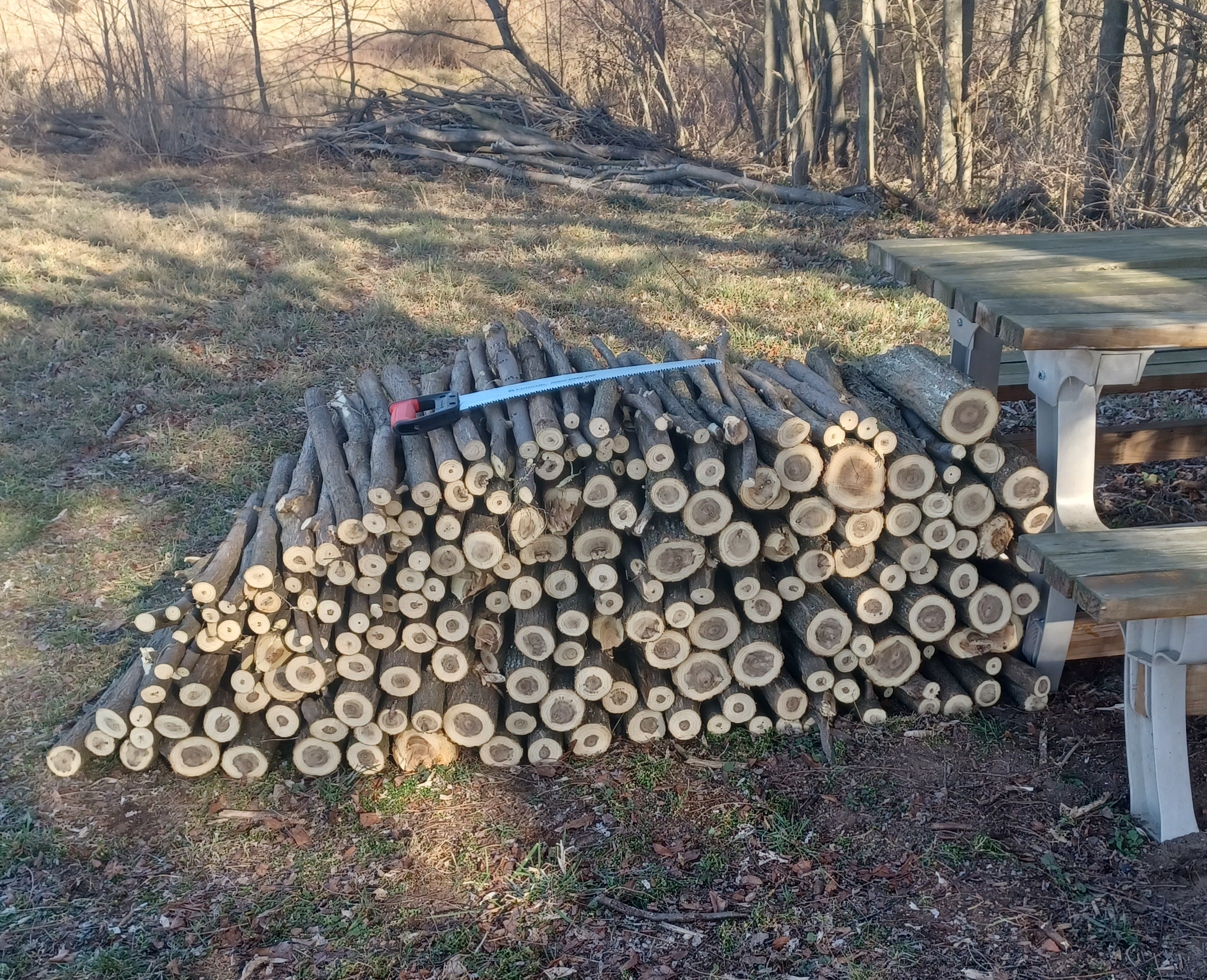
In continuing to document the coppicing project, I have above a photo of the stack of firewood from Plot A. It was cut using the saw in the picture – an 18″ Corona Razortooth pruning saw (Hand Tools: The Simple Choice), which I cannot recommend for out-of-the-box usage of this magnitude. The saw blade itself is fantastically sharp and an efficient cross-cutting tool, but the handle is less than ergonomic and quickly reveals hot-spots and pressure points. Thankfully they have the handle attached to the blade with removable screws and I intend to replace it at some point with a custom wooden handle of the proper shape. Uncomfortable handle notwithstanding, with the help of family (Helpful Children) the wood was cut in less than 3 hours.

Continue reading

9 Comments

Filed under agrarianism, hand tools, homesteading, trees, Uncategorized, woods

Black Locust Coppicing, Part 1

Pile of harvested black locust poles

Disclaimer: Outside of its native range (in and around the Appalachian Mountain range in Eastern North America) Black Locust – Robinia Pseudoacacia – can become invasive. It is a pioneer species meant to recolonize disturbed ground and compete with grass. If you are outside of its native range please proceed with caution with this species, or consider using a species native to your area that fills the same niche.

Black Locust Coppicing – …, Part 2, Part 3, Part 4, Part 5, Part 6, Part 7

In an attempt to move closer to sustainability (Thinking in Long Terms), I have begun the process of coppicing black locusts for many uses, primarily firewood for heating purposes. Black locusts have among the highest BTU’s per cord of North American trees, and have a few properties which make them endearing to me personally and to many of the homesteading persuasion. They are a pioneer species which can compete with grass species favorably if not mowed, are among the fastest growing hardwoods, are leguminous nitrogen fixers, are slightly more deer resistant than other trees due to their sharp thorns, and the wood has been known to last decades as fence posts. Their thorns do make a nuisance for the grower as well as the deer, but a good pair of leather gloves mostly makes it a non-issue. I will try to provide a detailed data-set as this project goes on so that we can all benefit from more than just anecdotes, and over time I think it will if nothing else allow me to better plan my own projects and heating needs.

Continue reading

6 Comments

Filed under agrarianism, hand tools, homesteading, trees, Uncategorized, woods

A Poem

The earth doesn't need us. How does that make you feel?
Taste a poem.
There are no consequences for your actions. Do you give or do you take?
Feel a song.
The one substance needed for life to exist rains from the sky in vast quantities, yet we buy it in small toxic containers from people we don't know only to throw the container away so someone else will throw it on the ground somewhere we don't have to look at it anymore.
Smell a landscape.

View the world.
Sense your place in it.

Leave a comment

Filed under poetry

Mulching Comparison Experiment, Part 2

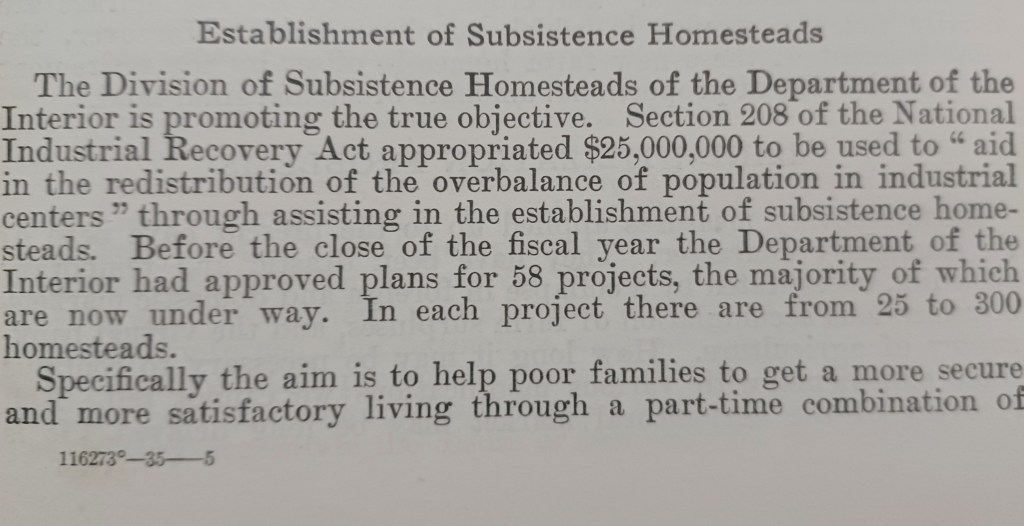
1935 USDA Yearbook of Agriculture; A different time with different solutions

I find it necessary to address the sustainability of each of the methods of growing that I will be comparing in my Mulching Comparison Experiment, Part 1. Sustainability is very important to consider when undertaking any agricultural venture. When I say sustainability I mean it very literally, not just speaking from an environmental standpoint. Can this method be sustained indefinitely under the current or foreseeable future conditions?

Continue reading

Leave a comment

Filed under agrarianism, homesteading, soil, Uncategorized